
Heart Congress 2024, Bangkok: A Congress That Delivered on Every Front
Category: Conference Report | Reading Time: 7 min | Event: 2nd World Congress on Heart and Cardiovascular Diseases
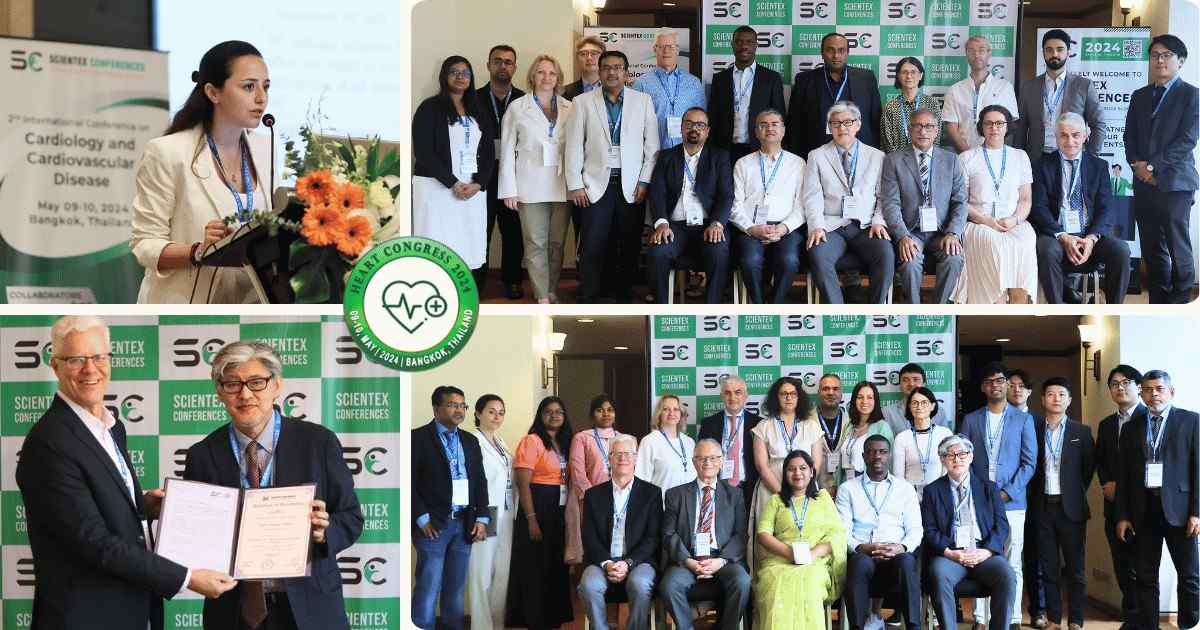
Bangkok, May 09-10, 2024. Two days. One city. Nearly a hundred cardiovascular professionals from across the globe - and a scientific programme that covered everything from cutting-edge cardiac surgery to SGLT2 inhibitor pharmacology, point-of-care diagnostics to oncology-related cardiotoxicity.
The 2nd World Congress on Heart and Cardiovascular Diseases set out to reflect where cardiovascular medicine actually stands in 2024 - not just the headline trials, but the clinical questions that practitioners grapple with daily. By most accounts, it succeeded.
The Numbers Behind the Congress
Before diving into the science, here is the shape of what happened:
- Dates: May 9–10, 2024
- Location: Bangkok, Thailand
- Format: In-person + virtual hybrid
- Theme: Novel Progression towards Heart and Cardiovascular Research
- Session types: Keynote, speaker, poster, video, e-poster
- Attendees: ~100 speakers and delegates
- Countries represented: 20+ countires
- Moderators: Dzhwar Jamal (Iraq) & Keval Yerigeri (USA)
Opening the Scientific Conversation: Day 1 Keynotes
Aortic Reintervention After the Frozen Elephant Trunk Procedure
Tatsuya Nakao of New Tokyo Hospital, Japan opened the congress with a keynote examining aortic reinterventions following the Frozen Elephant Trunk (FET) procedure with Frozenix. The FET technique is used in complex aortic arch surgeries, and questions around long-term durability and reintervention planning remain clinically live. Dr. Nakao's presentation gave delegates a focused look at real-world outcomes data - the kind that informs decision-making in ways general trials often cannot.
Point-of-Care Testing in Cardiac Disease
Anshuman Darbari from the All India Institute of Medical Sciences (AIIMS), India, addressed the current status and future direction of point-of-care testing in cardiac diseases. As diagnostic tools move increasingly toward the bedside, emergency room, and outpatient setting, this session framed the opportunity clearly: faster diagnosis, broader access, but also the need for standardisation and validation.
Day 1 Speaker Highlights: Breadth in Every Session
The speaker sessions on Day 1 covered an impressive range of territory:
Structural and Valvular Heart Disease
- Nitin Kumar Kashyap (AIIMS, India) presented single-centre trial data on the new bi-leaflet Miltonia valve in mitral valve replacement
- Shobhit Mathur (U N Mehta Institute of Cardiology, India) examined mortality and valve type outcomes in tricuspid valve replacement across a diverse patient population
Vascular and Aortic Conditions
- Francis C Anene (Darlington Memorial Hospital, UK) presented a case report on extensive aortic dissection in a low-risk male - a reminder that rare presentations can occur in unexpected patients
- Imaad Rahman (Royal Blackburn Teaching Hospital, UK) detailed a case of electric storm, navigating a life-threatening arrhythmic emergency with a level of clinical granularity that case reports uniquely allow
Arrhythmia and Electrophysiology
Oleg Sapelnikov (National Medical Research Center of Cardiology, Russia) presented on a zero-fluoroscopic approach to catheter ablation of cardiac arrhythmias - a technique with growing appeal given concerns about cumulative radiation exposure in cath lab staff and patients alike
Pharmacology and Biomarkers
- Alka Goyal (Government Medical College and Rajindra Hospital, India) delivered two sessions on PCSK9 - one on serum PCSK9 levels in chronic kidney disease and another specifically in haemodialysis patients - bridging nephrology and cardiology in a way that reflects the complexity of real clinical practice
- Evgeniya Tavlueva (Medical Research Center for Therapy and Preventive Medicine, Russia) presented pilot trial data on a novel glycoprotein IIb/IIIa receptor inhibitor in acute coronary syndrome
Special Topics
- Rajkumar Sachdewani (GMC/SMBB Medical University, Pakistan) on peripartum cardiomyopathy — still a management challenge, still underrecognised in some settings
- Stefan Schreier (Mahidol University, Thailand) on systemic cytology for evidence-based investigation of cardiovascular disorders
- Aquilino Hurle Gonzalez (General University Hospital of Alicante, Spain) on sex roles in degenerative cardiovascular disease and its relationship with gingivitis
Day 2: From Preventive Cardiology to Oncocardiology
Day 2 opened with two keynotes that between them covered a significant portion of current cardiovascular pharmacology debate.
SGLT2 Inhibitors: Nuancing the Evidence
Douglas Duffee (Rocky Vista University, USA) delivered a keynote on the nuanced use of SGLT2 inhibitors in preventive cardiology. By 2024, these agents were well established in heart failure management - but the preventive cardiology application, patient selection, and clinical nuance around initiation and monitoring remained active areas of discussion. This session addressed exactly that space.
Cardiotoxicity of Antitumour Agents
Alexandros Tselepis (University of Ioannina, Greece) examined the pathogenetic mechanisms behind cardiotoxic effects of antitumour agents. Cardio-oncology has emerged as one of the more consequential subspecialty developments in recent cardiology, and this keynote placed the Bangkok congress firmly in that conversation.
Day 2 Speaker Sessions: Global Perspectives in Practice
The afternoon sessions on Day 2 ranged widely across geographies and clinical questions:
- M B Faslur Rahuman (National Hospital of Sri Lanka) - real-world PCI outcomes at a national heart centre, offering practice data rarely seen in international literature
- Hack-Lyoung Kim (Boramae Medical Center, South Korea) - arterial stiffness measures and their incremental value in cardiovascular risk assessment
- Keval Yerigeri (Case Western Reserve University, USA) - haemochromatosis screening, diagnosis, and novel management considerations
- Ning Zhou (Huazhong University of Science and Technology, China) - long-term cardiovascular outcomes with nicorandil combined with dihydropyridine calcium channel blockers in coronary heart disease
- Darin F Ardus (National Medical Research Center of Cardiology, Russia) - cryoballoon and radiofrequency ablation benefits in AF patients with chronic heart failure and systolic dysfunction
- Ildar Fakhradiyev (Kazakh National Medical University, Kazakhstan) - hypercholesterolaemia prevalence and demographic variation in Kazakhstan
- Jannatul Ferdous (Directorate General of Health Services, Bangladesh) - post-caesarean section hypertensive emergencies, prevalence and management
- Jorge Palazuelos Molinero (La Luz University Hospital, Spain) - long follow-up outcomes of bifurcation lesion treatment with rotational atherectomy and provisional stenting
Poster and Video Presentations: Research Worth Noting
Three poster presentations stood out for their scientific focus:
- Keita Horitani (Kansai Medical University, Japan) - empagliflozin's cardioprotective role through modulation of CCL2 expression in cardiac fibroblasts, offering molecular-level insight into how SGLT2 inhibitors may attenuate heart failure progression
- Kasturi Markandran (National University of Singapore) - anthracycline-induced cardiotoxicity from an endothelial perspective
- Gabriela Strey (Hervey Bay Hospital, Australia) - titled simply "Be wise, look twice," a case-based session emphasising careful clinical assessment
Video presentations extended the reach of Day 2 to include:
- Dynamic myocardial perfusion imaging in obstructive coronary artery disease (Russia)
- Multisystem lesions in Fabry disease (Kazakhstan)
- Oral anticoagulants in atrial fibrillation — current evidence (Ecuador)
- Incremental determinants of the combined supine-prone protocol for myocardial perfusion scintigraphy (Brazil)
Heart Webinar 2024: Science Without Borders
One week after the Bangkok congress, the 2nd International Webinar on Heart and Cardiovascular Diseases took place on May 16–17, 2024 (GMT+7 timezone). Nearly 100 participants professors, researchers, students, and clinicians from institutions across academia and industry joined the fully virtual event.
The webinar carried the same theme as the congress: Novel Progression towards Heart and Cardiovascular Research. It featured keynote addresses, oral sessions, presentations by young investigators, video submissions, and poster presentations, a full scientific programme delivered entirely online.
The success of the 2024 webinar, measured by attendance and participant feedback, directly shaped planning for the 3rd International Webinar on Heart and Cardiovascular Diseases, held in May 2025 in the GMT+4 timezone.
In Their Own Words: Voices from Bangkok
The most candid measure of a conference is what those who attended actually take away from it. Here is what speakers said after Heart Congress 2024:
"This conference has enough time to discuss, and there are many kinds of items we can learn a lot of things."
— Tatsuya Nakao, New Tokyo Hospital, Japan | Keynote Speaker
"You have collected every surgeon, cardiologist from all over across the world... I would like to express my gratitude and sincere thanks to the organizers who made this such a wonderful conference."
— Nitin Kumar Kashyap, All India Institute of Medical Sciences, India
"This is a great chance for cardiologists all over the world to exchange experience and to know more about different spheres of cardiology and cardiovascular surgery and a great possibility to get new acquaintances."
— Darin F Ardus, National Medical Research Center of Cardiology, Russian Federation
"It's a great honor for me, but also a very good opportunity for our Chinese doctors to attend these conferences and share our scientific findings with experts from all over the world."
— Ning Zhou, Huazhong University of Science and Technology, China
"It was a lovely conference, lots to learn from all the different dignitaries all over the world and a very, very well organised conference."
— Imaad Rahman, Royal Blackburn Teaching Hospital, UK
"I had a good time in Bangkok with a good conference. I appreciate your kind help. If I have a chance I will attend the meeting again."
— Hack-Lyoung Kim, Boramae Medical Center, South Korea
What Made Bangkok Different
Heart Congress 2024 covered a lot of scientific ground, but a few things stood out as particularly noteworthy:
- Cross-specialty scope - cardio-oncology, nephrocardiology, cardiac surgery, electrophysiology, and preventive medicine all appeared meaningfully on the same programme
- Real-world data - multiple sessions drew on actual practice outcomes rather than trial populations alone, including PCI data from Sri Lanka and ablation outcomes from Russia
- Geographic diversity - presentations from Japan, India, South Korea, China, Russia, UK, Spain, USA, Greece, Kazakhstan, Bangladesh, Sri Lanka, Ecuador, Pakistan, Iraq, Malaysia, Ireland, Thailand, Brazil, and Australia
- First-time international speakers - the Bangkok congress provided the international platform for researchers presenting outside their home country for the first time
- Companion webinar - the May 2024 webinar extended the scientific conversation to nearly 100 additional participants who could not attend in person
A Note on Continuity
Heart Congress 2024 closed with an announcement of the 3rd International Conference on Heart and Cardiovascular Diseases scheduled for May 2025 in Dubai, UAE. That the series continued, with growing attendance and expanding geographic reach, speaks to something simpler than marketing: the congress was worth coming back to.
For clinicians and researchers tracking the Heart Congress series, full proceedings, past speaker affiliations, and gallery materials from the Bangkok event are available below,
2024 Conference Access here: Gallery | Proceedings | Testimonials | Attendees
You Might Also Like
More Blogs


Archives

Quick Links
Explore More
Past Conferences
Past Webinars
General Enquiry
Finance Enquiry
Contact Number
- USA (+1) 272 374 1068