
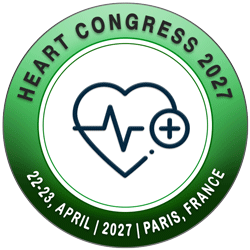
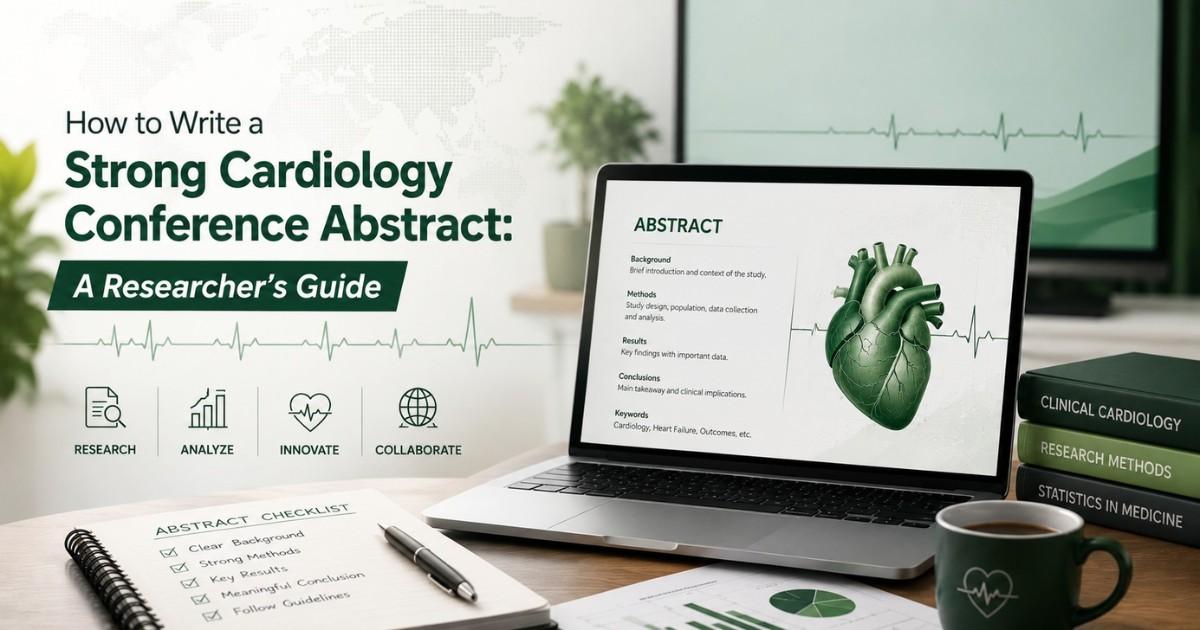
How to Write a Strong Cardiology Conference Abstract: A Researcher's Guide
Category: Research & Academic Development | Cardiology Education | Reading time: 5 mins
Introduction
Presenting research at a cardiology conference is an important opportunity for researchers, clinicians, and healthcare professionals to share their findings with the scientific community. However, before a study can be presented as an oral presentation or poster, it must first be accepted through the abstract submission process.
A well-written abstract serves as the first impression of your research. Conference reviewers often evaluate hundreds of submissions, making it essential to communicate your study clearly, accurately, and concisely.
Whether you are a first-time presenter or an experienced investigator, understanding how to prepare a strong cardiology conference abstract can significantly improve your chances of acceptance.
Quick Answer
A strong cardiology conference abstract should be structured, concise, and clinically relevant. It must clearly state the background, objective, methods, results, and conclusion -all within the word limit. Reviewers prioritize clarity, originality, and the significance of findings. Avoid vague language, unsupported claims, and incomplete data.
What Is a Conference Abstract?
A conference abstract is a brief summary of a research project, clinical study, case report, or systematic review submitted for presentation at a scientific meeting.
The purpose of an abstract is to provide reviewers and attendees with a concise overview of:
- The research question
- Study objectives
- Methods used
- Key findings
- Conclusions and significance
Most cardiology conferences require abstracts between 250 to 350 words, making every sentence important.
Why Abstract Quality Matters
A strong abstract can:
- Increase the likelihood of acceptance.
- Improve visibility for your research.
- Attract interest from collaborators.
- Enhance professional recognition.
- Create opportunities for publication and networking.
On the other hand, even valuable research can be overlooked if the abstract is poorly organized or difficult to understand.
Start with a Clear Research Question
The foundation of every strong abstract is a well-defined research question.
Before writing, ask yourself:
- What problem does the study address?
- Why is this issue important in cardiovascular medicine?
- What knowledge gap does the research attempt to fill?
A focused objective helps reviewers quickly understand the relevance of your work.
For example, instead of a broad objective such as:
"To study heart failure patients."
Consider:
"To evaluate the impact of remote monitoring on hospital readmission rates among patients with chronic heart failure."
Specific objectives create stronger abstracts.
Follow a Structured Format
Most cardiology conferences recommend a structured abstract format. Following these guidelines improves readability and makes it easier for reviewers to evaluate your submission.
Background
Briefly explain the clinical or scientific problem being investigated.
Example:
"Heart failure remains a leading cause of hospitalization worldwide, highlighting the need for effective monitoring strategies."
Objective
State the primary aim of the study clearly.
Example:
"This study evaluated whether remote patient monitoring reduced 30-day hospital readmissions among patients with chronic heart failure."
Methods
Describe how the study was conducted.
Include:
- Study design
- Patient population
- Sample size
- Data collection methods
- Statistical analysis
Keep this section concise while providing enough information to assess scientific validity.
Results
Present the most important findings.
Whenever possible:
- Include numerical data.
- Report statistically significant outcomes.
- Avoid vague statements.
Instead of writing:
"Patients showed improvement."
Write:
"Hospital readmissions decreased by 18% compared with standard care (p<0.05)."
Specific results strengthen credibility.
Conclusion
Summarize the key takeaway and potential implications.
Example:
"Remote monitoring may reduce hospital readmissions and improve long-term management of patients with chronic heart failure."
Focus on Clarity and Simplicity
One of the most common mistakes researchers make is trying to include too much information.
Remember that an abstract is a summary, not a full manuscript.
To improve clarity:
- Use simple and direct language.
- Avoid unnecessary technical jargon.
- Write short, concise sentences.
- Remove information that does not support the main objective.
A clear abstract is often more effective than one filled with complex terminology.
Highlight What Makes Your Research Important
Conference reviewers want to understand why your work matters.
Consider highlighting:
- Clinical relevance
- Novel findings
- Research innovation
- Potential impact on patient care
- Future research implications
Ask yourself:
"What should the audience remember after reading this abstract?"
The answer should be evident within the conclusion.
Common Mistakes to Avoid
Many abstract submissions are rejected due to avoidable errors.
Frequent Problems Include:
❌ Unclear study objectives
❌ Missing or incomplete results
❌ Lack of statistical information
❌ Overly technical language
❌ Grammar and formatting errors
❌ Conclusions not supported by data
❌ Failure to follow conference guidelines
Before submission, carefully review all formatting requirements, word limits, and category selections.
Review and Revise Before Submission
Strong abstracts rarely emerge from a first draft.
Before submitting:
- Review the abstract multiple times.
- Verify all data and statistics.
- Check spelling and grammar.
- Ensure consistency between objectives, methods, results, and conclusions.
- Ask a colleague or mentor to provide feedback.
An external review can often identify areas that need clarification or improvement.
Final Thoughts
Writing a strong cardiology conference abstract is both a scientific and communication skill. A well-structured abstract helps reviewers quickly understand the importance of your research and increases the likelihood of acceptance for presentation.
By focusing on a clear research question, presenting meaningful results, following conference guidelines, and communicating your findings concisely, researchers can significantly improve the quality of their submissions.
If you are preparing to submit research in cardiovascular medicine, Heart Congress welcomes original work across the full spectrum of cardiology — from basic science to clinical trials. Reviewing their abstract submission guidelines early gives your work the best chance of being heard.
FAQ
What is the ideal word count for a cardiology conference abstract?
Most cardiology conferences set limits between 250 and 350 words. Always check the specific submission guidelines for the conference you are targeting.
Can I submit an abstract with preliminary data?
Some conferences accept abstracts with preliminary findings, but competitive meetings often require complete results. Check the call for abstracts carefully.
How long does abstract review take?
Review timelines vary, but most major cardiology conferences notify applicants within six to ten weeks of the submission deadline.
Should I include references in my abstract?
Generally, no. Most abstract formats do not include space for references. If the format allows, limit citations to one or two key sources.
What happens after my abstract is accepted?
Accepted abstracts are typically assigned to oral presentation or poster sessions. You will receive specific instructions on format, timing, and submission of presentation materials.
Is it acceptable to submit the same abstract to multiple conferences?
Policies differ. Some conferences prohibit simultaneous submissions or previously presented work. Always review the originality requirements before submitting.
You Might Also Like
More Blogs





Archives

Quick Links
Explore More
Past Conferences
Past Webinars
General Enquiry
Finance Enquiry
Contact Number
- USA (+1) 272 374 1068