
Four Editions In, Heart Congress Found Its Rhythm in Kuala Lumpur
Category: Conference Report | Reading Time: 7 mins
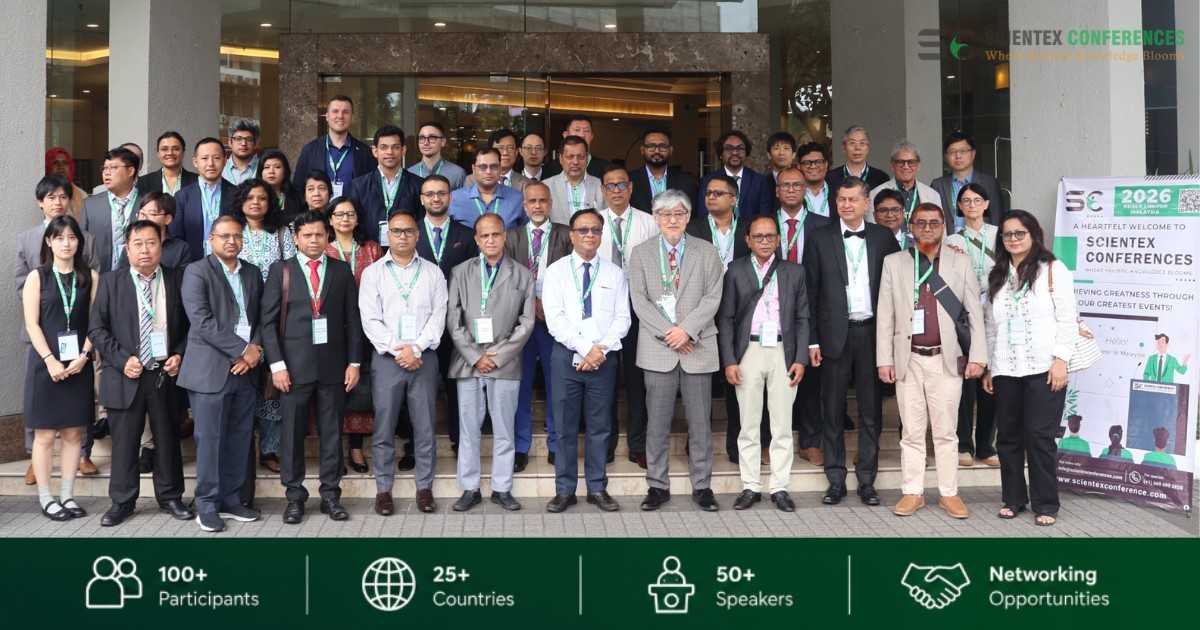
There is a particular kind of conference that does not try to be everything. It does not fill four parallel tracks, does not stack sixty speakers into back-to-back ten-minute slots, and does not chase numbers at the expense of conversation. Heart Congress 2026, held at the AC Hotel by Marriott in Kuala Lumpur on May 4–5, 2026, was that kind of conference - and by the accounts of those who attended, it delivered precisely because of it.
The 4th International Conference on Heart and Cardiovascular Diseases brought cardiothoracic surgeons, cardiologists, researchers, and clinicians from Japan, India, Russia, the UK, the USA, Argentina, the Philippines, Australia, China, Bangladesh, Indonesia, Kazakhstan, Ireland, Tunisia, and beyond into a two-day programme structured around six clinical session tracks. The theme remained what it has been since 2023: Novel Progression Towards the Heart and Cardiovascular Research. The science, however, was anything but familiar ground.
Opening the Stage: Keynotes That Set the Agenda
The first morning opened with three keynotes that together covered a remarkable range from cardiac electrophysiology practice in a US medical centre to decade-long surgical outcomes data from Japan and ECG interpretation applied in the insurance industry in China.
Terrance Khastgir (Integris Baptist Medical Center, USA) opened the congress with a session on heart failure management from an electrophysiology perspective positioning device therapy and electrical interventions within the broader heart failure care framework. As session chair for the morning track, Khastgir's presence shaped the scientific tone of the day.
Tatsuya Nakao (New Tokyo Hospital, Japan) appearing at Heart Congress for the fourth year running brought ten-year data from a uniquely challenging patient population: Jehovah's Witness patients undergoing bloodless open cardiac surgery. The session combined genuine clinical rarity with procedural depth, and drew on Japan's experience of adapting complex cardiac surgery to ethical and religious constraints without compromising outcomes. It also allowed for a comparative look at international approaches to the same challenge.
Zhongjian Li (Zhengzhou University, China) closed the first keynote block with a presentation on expert consensus in ECG identification as applied in the insurance industry, a topic that sits at the intersection of clinical cardiology and medical risk assessment, and one that opened the programme to discussions about how cardiological interpretation travels beyond the clinic.
The second morning's keynotes were equally distinct in character. Daniel Victor Ortigoza (Hospital de Morón and Syrian-Lebanese Hospital, Argentina) addressed anticoagulation in elderly and frail patients with atrial fibrillation, a question with no clean algorithmic answer and significant clinical consequence. Anand Balaram Patil (Dr. ABPRIFR and Medicover Hospitals, Mumbai, India) presented a case study that challenged standard thinking about recovery ceilings: a patient achieving a VO2 peak of 37.5 following acute proximal LAD stent thrombosis and ventricular tachycardia storm in HFrEF. It was a clinically striking opening to the afternoon.
The Six Clinical Tracks: A Programme Built for Depth
Rather than presenting the science chronologically, it is worth understanding what Heart Congress 2026 actually covered and why the session architecture mattered.
Cardiac Electrophysiology, Imaging, Clinical Cardiology, and Surgery
The morning session track on the first day covered significant ground across subspecialties:
- Artem Komkov (Moscow City Clinical Hospital 67, Russia) examined the relationship between supraventricular extrasystole and atrial fibrillation paroxysms - a mechanistic question with practical implications for arrhythmia monitoring and intervention timing
- Anmol Rathore (John Radcliffe Oxford University Hospitals, UK) presented on lung ultrasound scoring and its correlation with modified Ross score in infants with left-to-right shunt bridging paediatric cardiology and critical care imaging
- Surya Satya Gopal Palanki (Nizam's Institute of Medical Sciences, India) described a collaborative cardiothoracic transplant ecosystem built through the NIMS–UT Southwestern partnership - a model of how institutional collaboration across continents shapes advanced cardiac care capacity
- Gabriela Strey (Hervey Bay Hospital, University of Queensland, Australia) presented a case series of eleven patients with troponin interference in clinical practice - a diagnostic pitfall that remains underappreciated in rural and regional hospital settings
- Kazuhisa Kaneda (Kyoto University Hospital, Japan) shared data on online cardiac rehabilitation for Japanese patients with coronary artery disease - a session that raised practical questions about digital health delivery, patient compliance, and outcome equivalence with in-person programmes
- Nikita Chibisov (Botkin Hospital, Russia) contributed two sessions across the programme - one comparing warm blood cardioplegia formulations in prolonged aortic cross-clamping, and one on haemoadsorption for antiplatelet and anticoagulant elimination in urgent cardiac surgery. Both were technically detailed and drew on real institutional experience
Coronary Artery Disease, Structural Heart Disease, and Interventional Cardiology
The afternoon of the first day brought structural heart disease and intervention to the fore:
- Muhammad Jibran Hakak (Queen Elizabeth Hospital, London, UK) correlated C-reactive protein-to-albumin ratio with coronary artery disease severity in myocardial infarction patients - adding a simple, accessible biomarker to the risk stratification conversation
- Three sessions from the New Tokyo Hospital team examined transcatheter valve outcomes with a granularity rarely seen outside single-centre surgical data. Haruhito Yuki presented pathological assessment of a decade-old SAPIEN XT valve showing accelerated structural degeneration in a dialysis-dependent patient, as well as management of severe aortic stenosis with an infra-aortic-annular aneurysm using the Evolut FX device. Toru Naganuma reported two-year outcomes of valve-in-valve TAVI (SAPIEN 3 Ultra RESILIA-in-SAPIEN XT) in a small annulus. The cumulative weight of this structural valve data from a single Japanese centre was one of the scientific highlights of the congress
- Daniel Chadda (The George Washington University, USA) addressed the clinical importance of early endovascular intervention in type-B aortic dissection
- Jecco Ani Babu (Caritas Hospital, India) presented practical tips and techniques in minimally invasive coronary artery bypass grafting - bridging surgical technique and clinical decision-making in the MICS-CABG space
- Toru Ouchi (New Tokyo Hospital, Japan) closed the day with data on long-term outcomes of surgical left atrial appendage closure with and without ongoing anticoagulation - a question with direct implications for stroke prevention strategy in AF patients undergoing cardiac surgery
Advanced Imaging, Vascular Medicine, and Cardiac Pharmacology
The second morning brought imaging and pharmacology into focus:
- Jyoti Borse (Smt. Kashibai Navale Medical College, India) compared point-of-care ultrasound with traditional imaging in critically ill patients - a head-to-head practical assessment with implications for emergency and ICU care pathways
- Andrea Radyaputri (Universitas Gadjah Mada, Indonesia) presented a systematic review of AI applications in chronic venous insufficiency management - a session that extended the AI-in-cardiovascular-medicine conversation into vascular disease
- Hanan Nur (Manchester University NHS Foundation Trust, UK) examined the molecular role of microRNAs in sinoatrial node calibration - one of the more basic-science-oriented presentations of the congress, and a useful counterweight to the predominantly clinical programme
- Nalini Kumari (Apollo Institute of Medical Sciences and Research, India) reviewed emerging treatment options for familial hypercholesterolaemia, with particular attention to RNA-based therapies and PCSK9 inhibition in a population where LDL targets are routinely missed
- Gulzhan Sarsenbayeva (Scientific Center for Pediatrics and Children's Surgery, Kazakhstan) presented a risk stratification framework for paediatric cardiac surgery patients with comorbid pathology - offering data from a region and patient population underrepresented in published surgical literature
- Alexandra Anisimova (I.V. Davydovsky City Clinical Hospital, Russia) shared preliminary real-world experience with goflikicept in patients with idiopathic recurrent pericarditis - an inflammatory condition with limited treatment options and a drug that represents a genuinely new therapeutic pathway
Cardiovascular Medicine, Pulmonary Hypertension, and Preventive Cardiology
The afternoon track of the second day brought a deliberately broader perspective:
- Fabian M Dayrit (Ateneo de Manila University, Philippines) presented a coconut-centred framework for holistic cardiovascular assessment - an unconventional but well-grounded session examining dietary fat composition, cultural food practices, and lipid metabolism from a Southeast Asian perspective
- Alina Cornea (Beacon Hospital, Ireland) - returning from Heart Congress 2025 examined the effect of amiodarone therapy on early post-transplant graft function in heart transplant recipients. Given the ubiquity of amiodarone use in arrhythmia management and the vulnerability of the transplanted heart in the early post-operative period, this was a clinically important and underexplored intersection
- Claudio L Pereira da Cunha (Federal University of Parana, Brazil) - also a returning speaker presented on vitamin D and the cardiovascular system, reviewing the evidence around its role in vascular function, cardiac muscle, and cardiovascular risk
- Tzhen Whey Chuah (Townsville University Hospital, Australia) described a case of sequential transcatheter thrombectomy for an enlarging right atrial thrombus in transit - a high-stakes emergency scenario managed with a minimally invasive approach
Video and E-Poster Presentations
The video presentation slots brought research from Russia, the UK, and further afield:
- Asya Alikhanovna Shadieva (Astrakhan State Medical University, Russia) - clinical and functional parameters in elderly hypertensive patients after COVID-19
- Olga Shevaldova (Federal State Budgetary Scientific Institution, Russia) - comprehensive cardiac rehabilitation in adolescents with congenital heart disease, examining systemic relationships
- Muhammad Usama (Nottingham University Hospitals, UK) - meta-analysis of ticagrelor versus clopidogrel in acute coronary syndrome patients on dialysis
E-poster presentations included an anaesthetic case report on off-pump CABG complicated by Impella-mitral valve interference from Keisuke Sumii (Saitama Sekishinkai Hospital, Japan), and a simulation science presentation from Anna Homes (DASH Simulation Centre, UK) on immersive technology in cardiac arrest training.
The 4th International Webinar: Parallel Science, Global Reach
Two weeks after the Kuala Lumpur congress closed, the 4th International Webinar on Heart and Cardiovascular Diseases took place on May 18–19, 2026, delivered virtually in the Malaysia time zone (GMT+8).
The webinar drew eminent cardiologists, cardiovascular researchers, healthcare professionals, and industry experts from across the globe. The programme featured oral and poster presentations, video sessions, and interactive Q&A discussions covering cardiology, cardiac surgery, heart failure, electrophysiology, preventive cardiology, vascular disease, and emerging cardiac technologies.
The organisers described the event's outcome clearly: the overwhelming response, positive feedback, and the quality of scientific engagement from attendees has motivated planning for the next edition. The 5th International Webinar on Heart and Cardiovascular Diseases is now scheduled for May 17–18, 2027.
What Attendees Said
The testimonials from Kuala Lumpur tell a consistent story — one about learning, access, and the value of a conference that makes room for genuine exchange.
"I like this meeting, because we can make good friends internationally, very familiar with everybody. So, next year, I am looking forward to participate in this conference."
— Tatsuya Nakao, New Tokyo Hospital, Japan
"I had a very nice time, very nice deliberations by experts from all around the world. We have seen experts speak on various subjects — cardiology, cardiothoracic surgery, perfusion, and more. Experts came from Japan to Philippines to UK to Russia to India - all around the globe. It is a very great learning experience."
— Surya Satya Gopal Palanki, Nizam's Institute of Medical Sciences, India
"This type of programme will increase our knowledge and it will be very much helpful for our clinical practice as well as for my patient."
— Kallyanashish Sardar, Satkhira Medical College Hospital, Bangladesh
"Me with 22 colleagues together attending this programme, and it will be very beneficial for us and for our patient after getting the knowledge and thinking from this programme."
— Prosenjit Biswas, Jhenaidah General Hospital, Bangladesh
"I learned a lot from this seminar and conference, and I am on to contribute to my patient for their well-being after returning from my motherland."
— Biswojit Mondal, Khulna Medical College Hospital, Bangladesh
The testimonials from Bangladesh are particularly worth noting. A group of 22-plus clinicians attending together from multiple hospitals and institutions represents exactly the kind of collective professional development that a well-run international congress enables. These were not researchers presenting papers; they were practising clinicians investing time and travel to bring new knowledge back to their patients.
Five Editions and What They Show
Heart Congress 2026 closed with the announcement of its next chapter: the 5th International Conference on Heart and Cardiovascular Diseases, scheduled for April 22–23, 2027, in Paris, France, under a new theme - Transforming Cardiovascular Care: Bridging Innovation, Research, and Clinical Excellence.
Looking at the series as a whole, a clear pattern has emerged across four editions and four cities:
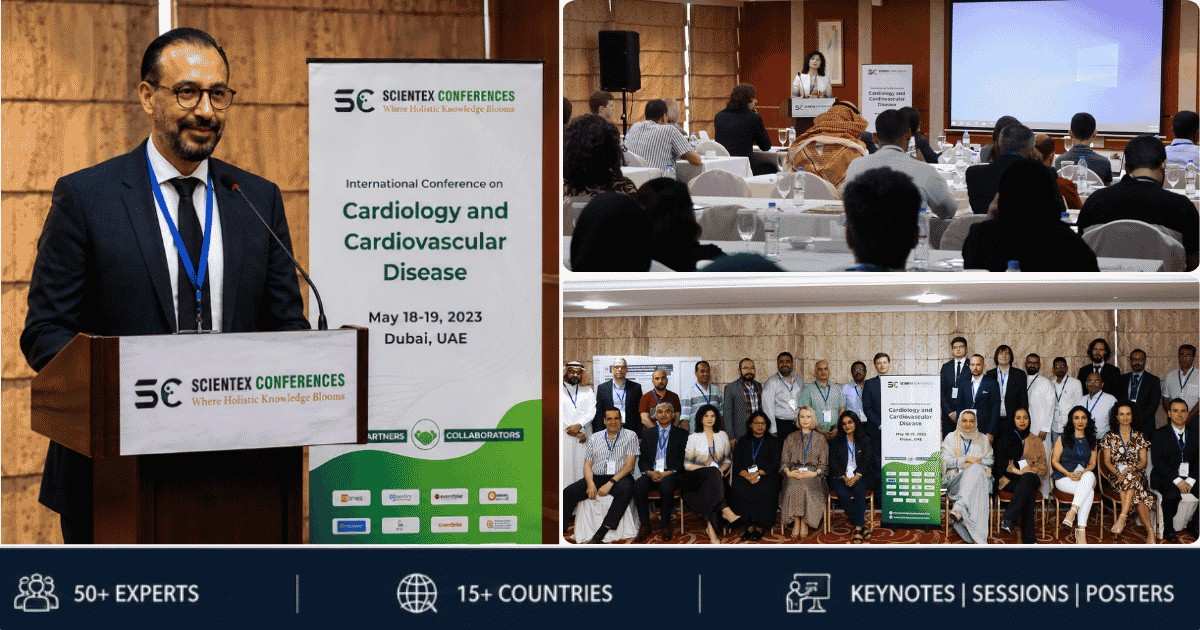
- 1st Edition (2023): Dubai, UAE — Webinar Timezone: GMT+4
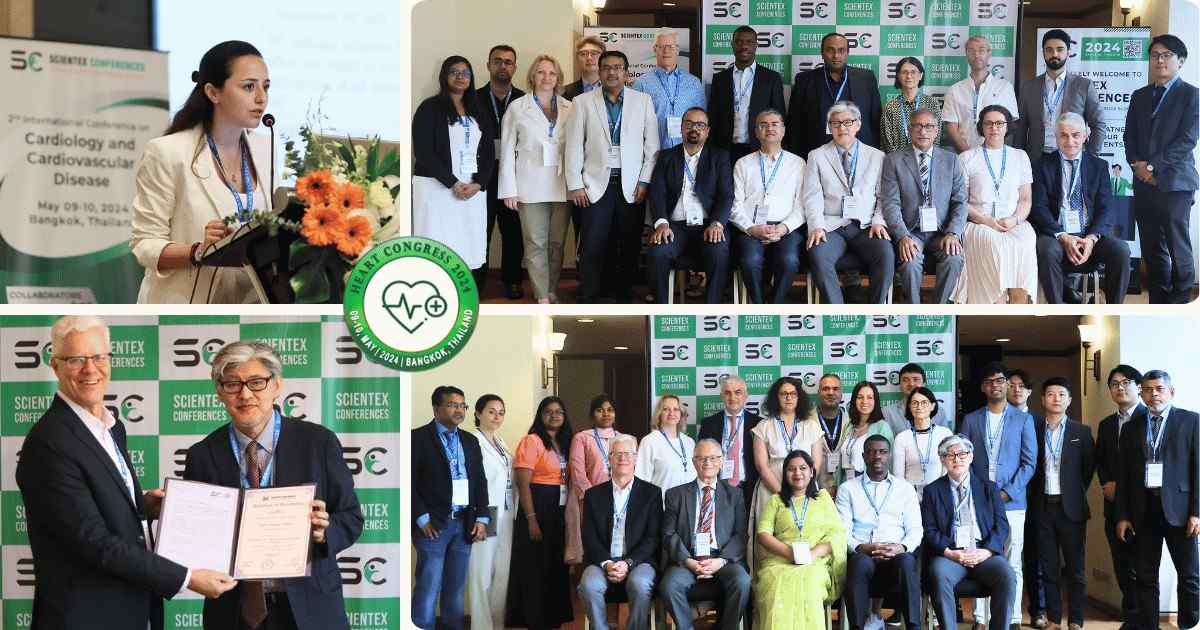
- 2nd Edition (2024): Bangkok, Thailand — Webinar Timezone: GMT+7
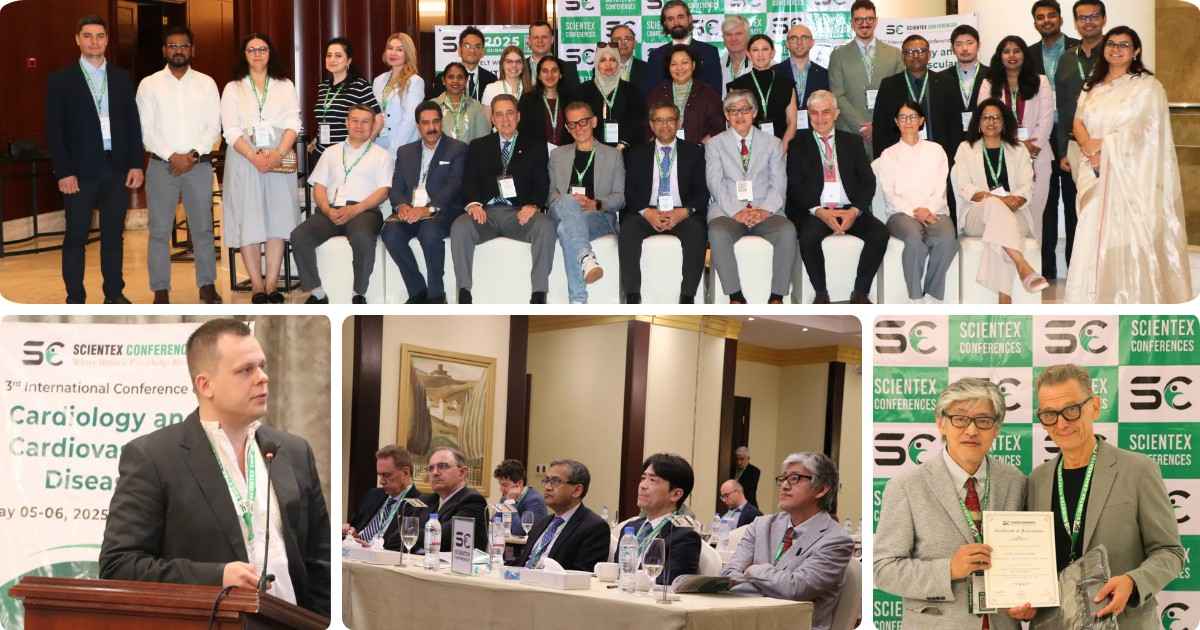
- 3rd Edition (2025): Dubai, UAE — Webinar Timezone: GMT+4
- 4th Edition (2026): Kuala Lumpur, Malaysia — Webinar Timezone: GMT+8
- 5th Edition (2027): Paris, France — Webinar Timezone: To Be Confirmed (TBC)
Each edition has rotated geography deliberately — covering the Middle East, Southeast Asia, South Asia, and now moving into Europe. The webinar series has tracked the in-person timezone, maximising accessibility for regional participants.
The scientific content has deepened correspondingly. From the foundational molecular and pharmacological presentations of 2023 to the surgical outcome series, AI imaging sessions, and transplant discussions of 2026, the programme has evolved while keeping the same essential character: focused, internationally diverse, and structured around genuine time for discussion.
Paris 2027 will mark the first European edition and the first under a new theme. It will likely draw a different mix of speakers and delegates and the scientific conversation will be richer for it.
Full proceedings, gallery, testimonials, and speaker profiles from Heart Congress 2026 are available below.
2026 Conference Access here: Gallery | Proceedings | Testimonials | Attendees
You Might Also Like
More Blogs


Archives

Quick Links
Explore More
Past Conferences
Past Webinars
General Enquiry
Finance Enquiry
Contact Number
- USA (+1) 272 374 1068