
Why International Cardiology Conferences Matter for Researchers and Healthcare Professionals
Category: Medical Education & Professional Development | Reading Time: 6 mins
Introduction
Every year, thousands of cardiologists, researchers, cardiac surgeons, and allied health professionals travel or log in remotely to attend international cardiology conferences. For those outside the circuit, it can look like an expensive way to sit through presentations. For those who attend regularly, the value is rarely questioned.
But what exactly makes these events worth the time, the travel, and the registration fee? The answer goes beyond continuing medical education credits or a line on a CV. International cardiology conferences function as a specific kind of infrastructure for the medical field one that serves researchers, clinicians, and ultimately patients in ways that journals, institutional training, and online resources simply cannot replicate.
Quick Answer
Why do international cardiology conferences matter?
International cardiology conferences accelerate the exchange of clinical research, expose attendees to global practice variations, create professional networks that support long-term collaboration, and provide a forum where emerging evidence is debated before it reaches published guidelines. For researchers, they offer visibility and peer feedback. For clinicians, they provide concentrated, up-to-date education across cardiology subspecialties in a compressed timeframe.
The Case for In-Person and Hybrid Scientific Exchange
Research Moves Faster When People Talk
Published cardiology literature is essential, but it operates on a delay. From study completion to peer review to publication, months or years can pass before findings reach a broad readership. Conferences compress that timeline.
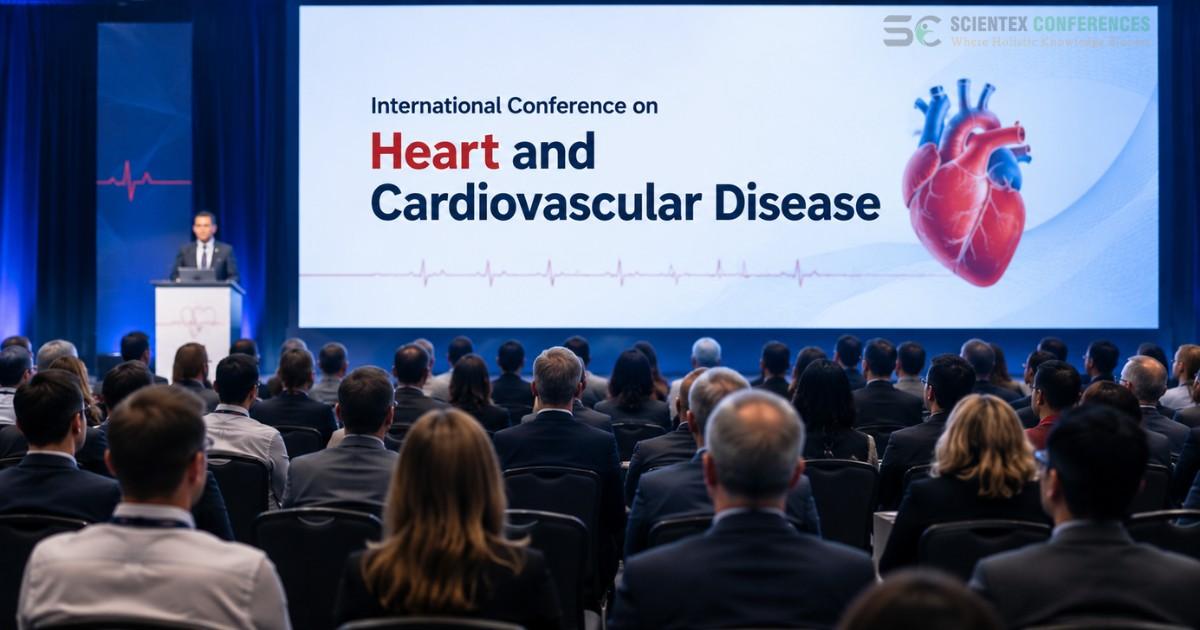
When a researcher presents a late-breaking trial at an international congress, the findings enter active clinical conversation immediately. Attendees ask questions, challenge methodology, draw comparisons with their own institutional data, and begin applying or deliberately not applying what they have heard.
This real-time scrutiny is something a journal article cannot replicate. The discussion that follows a well-presented abstract often generates more practical insight than the abstract itself.
Not All Cardiology Looks the Same Everywhere
One of the most underappreciated aspects of international medical conferences is the exposure they offer to how cardiovascular disease presents and is managed differently across regions.
A cardiologist practising in Western Europe may have limited clinical exposure to Chagas cardiomyopathy, rheumatic heart disease, or hypertension patterns in specific demographic groups. A researcher from South Asia may rarely encounter the Northern European data that dominates published guidelines. International conferences close that gap not by resolving the differences, but by making them visible.
Cardiology practice informed only by local data or dominant Western guidelines carries blind spots. Conferences that draw speakers from Latin America, the Middle East, South Asia, Africa, and Eastern Europe serve a genuine educational function that regional meetings cannot match.
What Researchers Gain from International Conferences
For researchers particularly those earlier in their careers international cardiology conferences offer several things that are difficult to obtain any other way:
- Peer feedback before publication. Presenting a poster or abstract allows researchers to test their methodology and findings against expert scrutiny before committing to a final manuscript. The questions asked during a poster session often improve the paper that follows.
- Visibility beyond institutional walls. Research conducted at smaller or less internationally connected institutions can go unnoticed if the only output is a journal article. Conference presentations put the work and the researcher in front of a broader audience.
- Access to collaborative opportunities. Shared research interests are difficult to identify at a distance. A brief conversation at a conference session frequently seeds collaborations that result in multi-centre studies, co-authored papers, or shared datasets.
- Exposure to unfamiliar methodologies. Attending sessions outside one's immediate subspecialty can introduce researchers to imaging techniques, statistical approaches, or molecular tools being used in adjacent fields approaches that may be directly applicable to their own work.
- Understanding of what the field considers important. Which questions are being asked, which trials are attracting attention, and which clinical problems remain unsolved are all things that become clearer after two days at a good international congress than after months of reading abstracts.
What Clinicians Gain from Attending Cardiology Congresses
For practising cardiologists and cardiovascular healthcare professionals, the value proposition is different but equally concrete.
Staying Current Without Losing Clinical Time
Cardiology moves quickly. Guidelines are updated, major trials report, and clinical practice evolves faster than most busy clinicians can track through journal reading alone. A well-structured two-day congress can deliver concentrated updates across heart failure, arrhythmia, imaging, interventional cardiology, preventive care, and cardiac surgery subspecialties that overlap routinely in clinical practice but are rarely covered together in any other educational format.
Hearing the Debate, Not Just the Conclusion
Guidelines and consensus documents present conclusions. Conferences present the arguments behind them including the disagreements. Hearing two experienced cardiologists debate appropriate timing for mitral valve intervention, or listening to a panel discuss conflicting hypertension targets in elderly patients, gives clinicians a more nuanced understanding of where the evidence is firm and where it is contested.
That nuance matters at the bedside. Medicine practised as though all guidelines are equally evidence-based and universally applicable produces worse outcomes than medicine practised with an understanding of clinical uncertainty.
Practical Skills and Technique Updates
Many international cardiology conferences include workshops, hands-on sessions, and technique demonstrations alongside their main scientific programme. For interventional cardiologists, electrophysiologists, and cardiac imaging specialists, these sessions offer learning that no lecture or published paper can provide.
The Network Effect in Cardiovascular Medicine
Why Who You Know Still Matters in Science
The idea that science should be purely meritocratic that good research finds its audience regardless of who conducted it is appealing and largely false. Careers in academic cardiology, research funding, collaborative opportunities, and even referral patterns are all influenced by professional relationships.
International conferences are one of the few environments where those relationships form naturally, across institutional and national boundaries. The colleague you meet during a coffee break may become a co-investigator on your next grant, a reference for a faculty position, or simply the person whose perspective you trust when facing an unusual case.
- Informal conversations at conferences are frequently cited by researchers as the origin of their most productive collaborations.
- Mentorship relationships that span countries and institutions often begin with an introduction at a scientific meeting.
- Early-career researchers who attend international conferences consistently report stronger professional networks than peers who do not.
Hybrid Formats Have Expanded Access
The shift toward hybrid conferences with virtual attendance options alongside in-person participation has meaningfully changed who can engage with international cardiology meetings. Researchers and clinicians from institutions with limited travel funding, from countries with restrictive visa processes, or with family and clinical responsibilities that make extended travel difficult can now participate in the same scientific programme.
This is not a consolation prize. Virtual attendance at a well-run hybrid conference offers genuine access to presentations, Q&A sessions, and even some networking functions. The field is better served by broader participation, and hybrid formats have made that possible.
How to Choose a High-Quality Cardiology Conference
Not all conferences offer the same educational value. When selecting a meeting, healthcare professionals should consider several factors.
Key Indicators of Conference Quality
✔ Peer-reviewed abstract submissions
✔ International faculty and speaker representation
✔ Diverse cardiology subspecialty coverage
✔ Opportunities for researcher and clinician participation
✔ Strong scientific program and educational content
✔ Hybrid or virtual attendance options
✔ Networking and collaboration opportunities
Conferences that prioritize scientific quality and international collaboration generally provide the greatest professional benefit.
A Final Thought
International cardiology conferences play a vital role in advancing cardiovascular science, improving clinical practice, and strengthening global collaboration among healthcare professionals.
By bringing together researchers, clinicians, educators, and industry experts, these meetings create opportunities for knowledge sharing, professional development, and scientific innovation. As cardiovascular disease continues to represent a major global health challenge, international scientific collaboration remains essential for improving patient outcomes and shaping the future of cardiovascular medicine.
Heart Congress is one example of an international cardiology meeting designed to facilitate scientific exchange, interdisciplinary learning, and collaboration among cardiovascular professionals from around the world.
Frequently Asked Questions
Why should cardiologists attend international conferences?
International conferences provide access to the latest research, clinical updates, expert discussions, networking opportunities, and continuing medical education in a concentrated format.
What are the benefits of presenting research at a cardiology conference?
Researchers gain visibility, receive expert feedback, improve their work before publication, and build collaborations with investigators from around the world.
How do conferences help early-career researchers?
Conferences provide exposure, mentorship opportunities, presentation experience, networking connections, and access to potential collaborators and future career opportunities.
You Might Also Like
More Blogs


Archives

Quick Links
Explore More
Past Conferences
Past Webinars
General Enquiry
Finance Enquiry
Contact Number
- USA (+1) 272 374 1068