
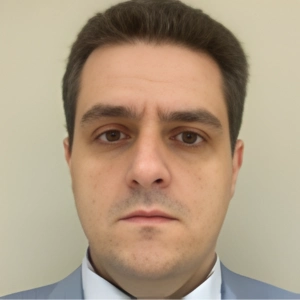
Caio Cesar Cardoso
Faculty of Medical Sciences of the Santa Casa of Sao Paulo, BrazilPresentation Title:
Should the cardiac heart valve prosthesis type choice also consider the valve size at the intraoperatively?
Abstract
Nowadays, there are two heart valve prosthesis types available: mechanical or biological. Apart from the long-term durability of mechanical valves, there are considerable advantages of bioprothesis, specifically regarding biocompatibility and the abdication of oral anticoagulation by warfarin. Since 2002, when Cribier described the first transcatheter valve implantation in the aortic position, there was widespread use of transcatheter valves not only for aortic valve stenosis, but also for treatment of degenerated conventional bioprothesis has started (known as "valve-in-valve"), which the first-in-human implantation was performed by Wenaweser in 2007. Moreover, it comes from 2016 the first report of sequential valve-in-valve implantation in a degenerated transcatheter valve previously implanted in a bioprothesis, by Leung. However, either conventional bioprothesis or transcatheter valves have limited durability. Conventional reoperation for degenerated bioprothesis is a very significant factor to be considered when choosing the type of valve prosthesis, since can add up to 8% at operative risk. In this context, valve-in-valve is an excellent alternative to reoperation. In order to mitigate conventional reoperation, it is possible to figure two variables to choose the type of valve: size of the prosthesis and age. If the anatomical annulus size (especially in aortic position) at the time of the conventional surgery is small, but not limiting, perhaps a mechanical prosthesis would be a good choice, as transcatheter therapy would not be feasible. A large annulus implies a bigger prosthesis, and considering the age of the patient, valve-in-valve and sequential procedures may be feasible to avoid conventional reoperation. Regardless of the surgeon's or patient’s preference for mechanical or biological heart valve prosthesis, there are tools to address the imperfections of each type. Valve-in-valve is an excellent therapy, less invasive, with progressive studies validating its feasibility, and impacting the choice of valve prosthesis type at the time of implantation via conventional surgery.
Biography
Caio Cesar Cardoso is a physician graduated from the Faculty of Medical Sciences of Santa Casa de Sao Paulo. General Surgeon from the Irmandade of Santa Casa de Misericórdia de Sao Paulo and Cardiovascular Surgeon from the Federal University of Sao Paulo. Has professional Master's Degree in New Technologies and Healthcare from the Federal University of Sao Paulo and doctorate in Cardiology from the Federal University of Sao Paulo. Works as professor of Medicine at the School of Medical Sciences of Santa Casa de Sao Paulo, physician in charge of the Cardiac Implantable Electronic Devices Outpatient Clinic of the Irmandade of Santa Casa de Misericórdia de Sao Paulo, head of the Cardiovascular Surgery Department at the Adventist Hospital of Sao Paulo and Cardiovascular Surgeon at Stella Maris Hospital. Also is an Associate Editor of Journal of Cardiology and Cardiovascular Research.

Organization Location
1309 Coffeen Avenue, STE 1200, Sheridan, Wyoming 82801, USA
General Enquiry
contact@scientexconferences.com
Finance Enquiry
finance@scientexconferences.com
Call us at
USA : (+1) 272 374 1068