
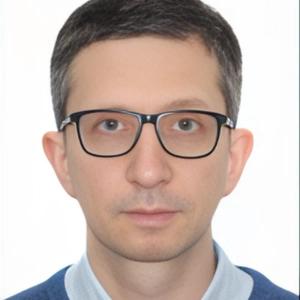
Artem Stepin
Ural Institute od Cardiology, Russian FederationPresentation Title:
Emergency Resuscitative Thoracotomy; upholding educational standards in resuscitation-based simulation
Abstract
Annotation: The purpose of this retrospective study is to analyze hemoglobin levels after intravenous use of ferric carboxymaltose in cardiac surgery patients.
Methods: The retrospective study included data from 113 cardiac surgery patients who underwent ferric carboxymaltose (FCM) infusion in the preoperative period (group 1). The control group (group 2) was selected by propensity scoring among 1,042 patients who did not receive an infusion of FCM. The analysis of the effect of the infusion of FCM on the level of hemoglobin (Hb), ferritin, the need of RBC transfusion, duration of the postoperative period, mortality and complications was carried out.
Results: After infusion of FCM in group 1, ferritin concentration increased from 37.1±15.4g/l to 588.3±150.4 (p= 0.0001). In group 1, there was a significant increase in Hb levels immediately after the infusion of FCM, as well as in the early postoperative period; in group 2, there was no increase in Hb levels. The decrease in Hb levels in group 1 at the time of discharge was 10.8±11.9 compared with the initial Hb level at admission, in group 2 19.8±12.8mg (p<0.001). In the postoperative period, patients of both groups received an average of 0.07±0.3 doses of autologous red blood cells (p=1). No deaths were recorded. The duration of treatment in the intensive care unit and the total duration of the postoperative period in both groups did not significantly differ. Surgical bleeding was recorded in 4 patients (3.5%) of group 1 and 1 patient (0.8%) of group 2 (p=0.35). The incidence of infectious complications did not significantly differ between the groups (p=0.35).
Conclusion: The use of a single infusion of iron carboxymaltose in cardiac surgery patients leads to a significant increase in hemoglobin levels immediately after the infusion and in the early postoperative period, without affecting the risk of infectious complications and death.
Biography
Artem Stepin graduated from Ural State Medical Academy (1992–1998) and completed his residency in General Surgery at Regional Hospital No. 1 in Ekaterinburg, Russian Federation (1998–1999). In 2001, he undertook a Fellowship in Cardio-Thoracic Surgery at the I.M. Sechenov Medical Academy in Moscow, Russian Federation, and in 2007–2008 completed a Fellowship in Adult Cardiac Surgery at Klinik für Herzchirurgie, Oldenburg, Germany, under an EACTS Scholarship. He earned his PhD in 2001 and his MD in 2024. From 1999 to 2001, he worked as a general surgeon at Regional Hospital No. 1 in Ekaterinburg, and from 2001 to 2010 as a cardiac surgeon in the Cardiac Surgery Department No. 2 at the same institution. Since 2010, he has been a cardiac surgeon and Head of the Cardiac Surgery Department at the Ural Cardiology Institute in Ekaterinburg. Since 2012, he has performed approximately 270 operations per year as lead surgeon, with a total of 5,700 operations between 2001 and 2025. He has authored more than 80 publications in the fields of cardiac surgery, infection, and hematology.

Organization Location
1309 Coffeen Avenue, STE 1200, Sheridan, Wyoming 82801, USA
General Enquiry
contact@scientexconferences.com
Finance Enquiry
finance@scientexconferences.com
Call us at
USA : (+1) 272 374 1068